Where are the rules?
a bit about how we do things differently.

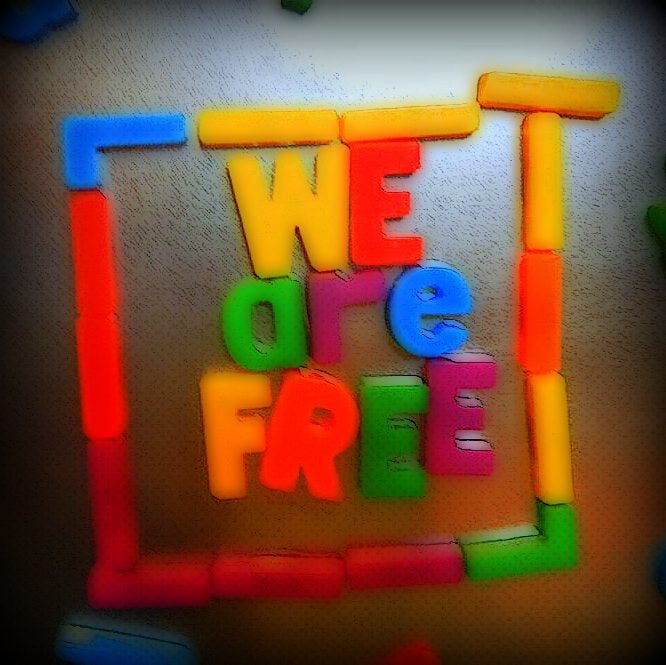
Fridge Poetry found at Glacier Lake School 2014
Where are the rules?
A person looking at the Meraki School handbook this year might be confused not to find a list of rules. How on earth could a school exist without rules? There’s a good reason you don’t see many rules in our handbook this year, we have made very few.
All the rules, we call them agreements, are made at the general assembly, where all the youth in the community work together to decide and agree on what agreements we will make.
But what about the basic rules you see at schools around bullying and language? When a difficult situation like bullying or hurtful language happens, that will be our opportunity as a community to discuss and decide how we will handle it. We take this seriously, and we trust our mediation and conflict processes to support the community in working through these issues together. If we as staff wrote a bullying policy and required youth to agree to it, the agreement would not be their agreement, and we would have no way of knowing if the youth actually understood and agreed to it authentically, and if folks had other ideas and insights that we didn’t think of. We would also be taking away the community’s opportunity to self manage if we created rules ourselves. The whole community needs the time and ability to assess the situation, decide how to handle it, what agreements to make and what will happen if those agreements aren’t honored.
At Meraki, the youth will create the agreements and thus understand why and how we made them. Instead of just agreeing to not bully, we will have a community conversation around bullying, really talk it out and create a plan together that addresses the issues. When that agreement is a part of our school, it becomes something everyone holds up, not just the staff, because it wasn’t the staff that forced it, it was the whole group that discussed, created, and consented to it.
The first years of a democratic school are exciting and can be difficult as we develop our culture and agreements. It takes time to get comfortable with the systems, learn to engage with them, and build a culture of youth ownership of the school. The only agreements going into the first year are to attend the general assembly, engage the conflict resolution process, and agree to the community responsibility policy.
hat kind of agreements will the general assembly make? The community can make any as long as they honor each person’s autonomy and freedom. The general assembly can not remove a youth’s ability to consent or create exclusionary policies. Agreements can also not break the law, go against the insurance policy, or the churches rules for the property. At the beginning of each year we will go over the agreements from the last year and make sure they are still relevant and useful. Parents, caregivers and community members can read the meeting minutes posted online to stay up to date with what is being discussed and agreed upon.
The job of the staff is to facilitate these community discussions, observe underlying social dynamics, and support youth in creating an inclusive, safe youth-run school. We don’t start out with a rulebook, we start with a general assembly and a deep trust that youth can run an amazing school with a bit of our support.